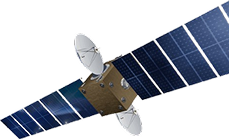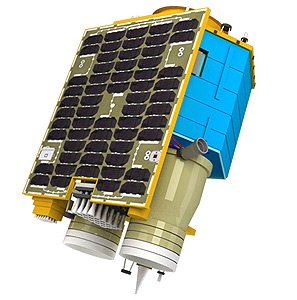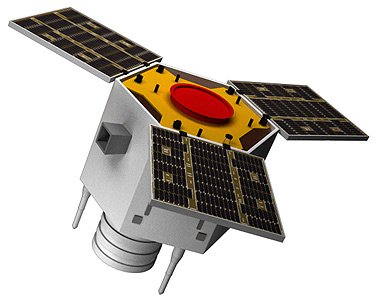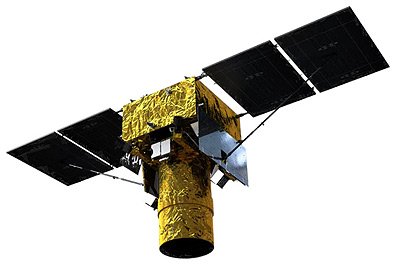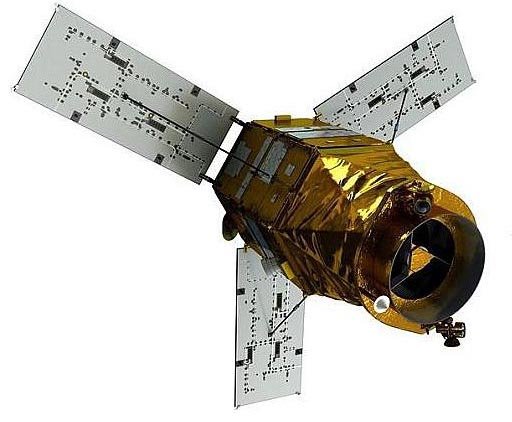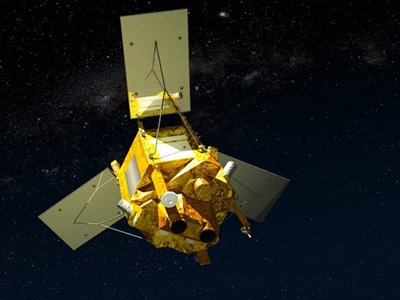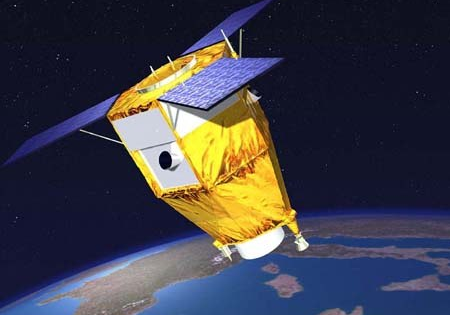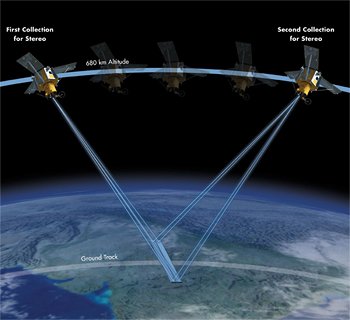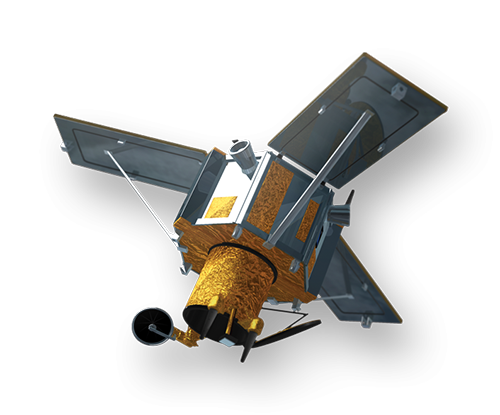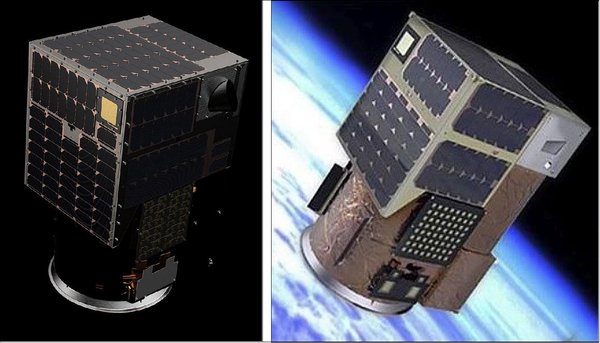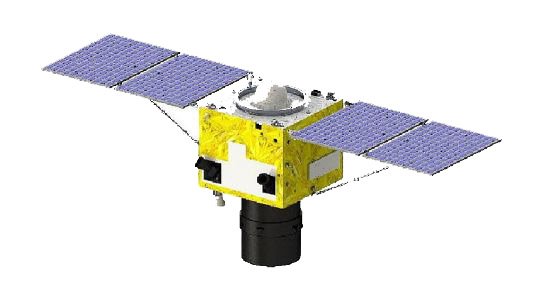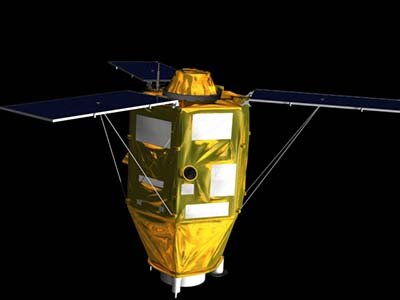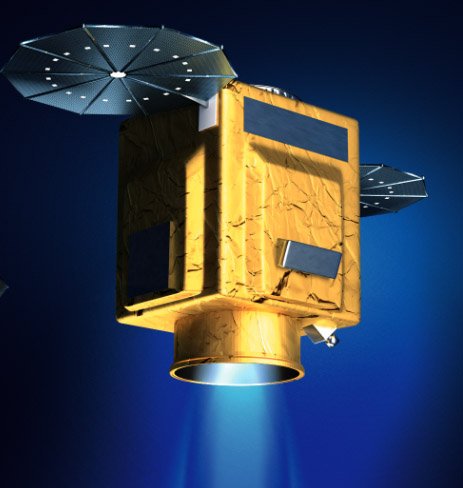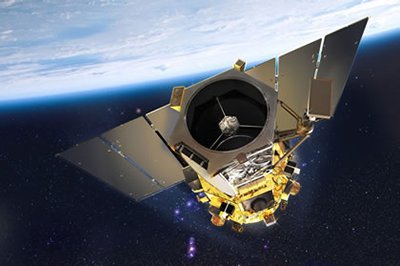
KOMPSAT-3A Satellite Sensor
(0.55m)
The KOMPSAT-3A spacecraft was launched on March 25, 2015, (22:08:53 UTC) on a Dnepr-1 vehicle from the Jasny Dombarovsky launch site in Russia. The launch provider was ISC (International Space Company) Kosmotras and will become commercially available during the summer of 2015. Watch the launch video.
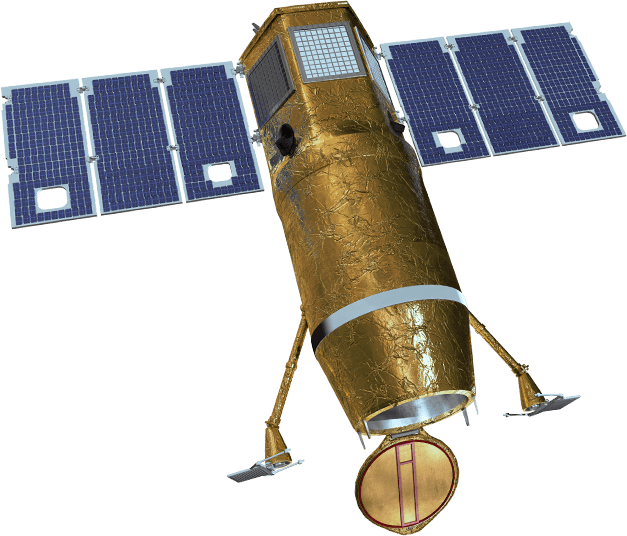
KOMPSAT-3A Satellite Sensor (0.55m)

Copyright © Korean Aerospace Research Insitute (KARI). All rights reserved.
Kompsat-3A will be a sister spacecraft to the previously launched Kompsat-3 (Arirang-3), both of which were developed by the Korea Aerospace Research Institute (KARI).
The major goal of the KOMPSAT-3A program is to develop an earth observation satellite to obtain IR (Infrared) and high-resolution EO (Electro-Optical) images for a variety of applications such as Geographical Information Systems (GIS), environmental, agricultural, global climate change, urban planning, and disaster relief. KOMPSAT-3A will provide a panchromatic resolution of 0.55m and multispectral resolution of 2.20m and also has an infrared sensor at 5.5m resolution.
KOMPSAT-3A is equipped with two imaging payloads; the Advanced Earth Imaging Sensor System A (AEISS-A) and an Infrared Imaging Payload. AEISS-A is similar to that of the KOMPSAT-3 spacecraft and was developed by KARI with technical support from Astrium Defence and Space and the German Aerospace Center that developed the Focal Plane Assembly and main Camera Electronics Unit.
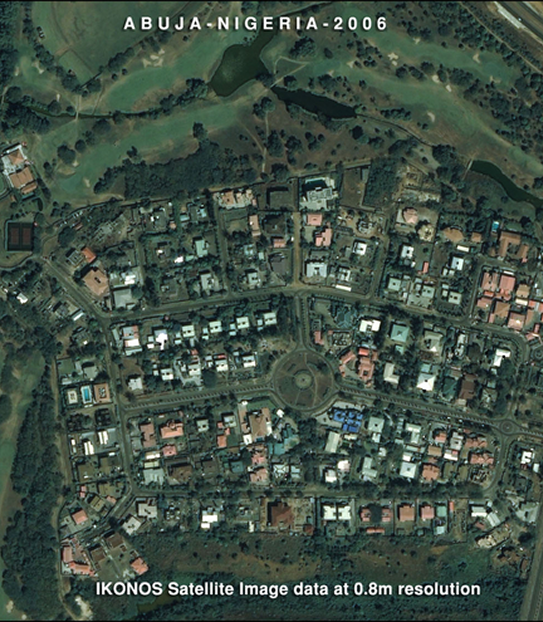
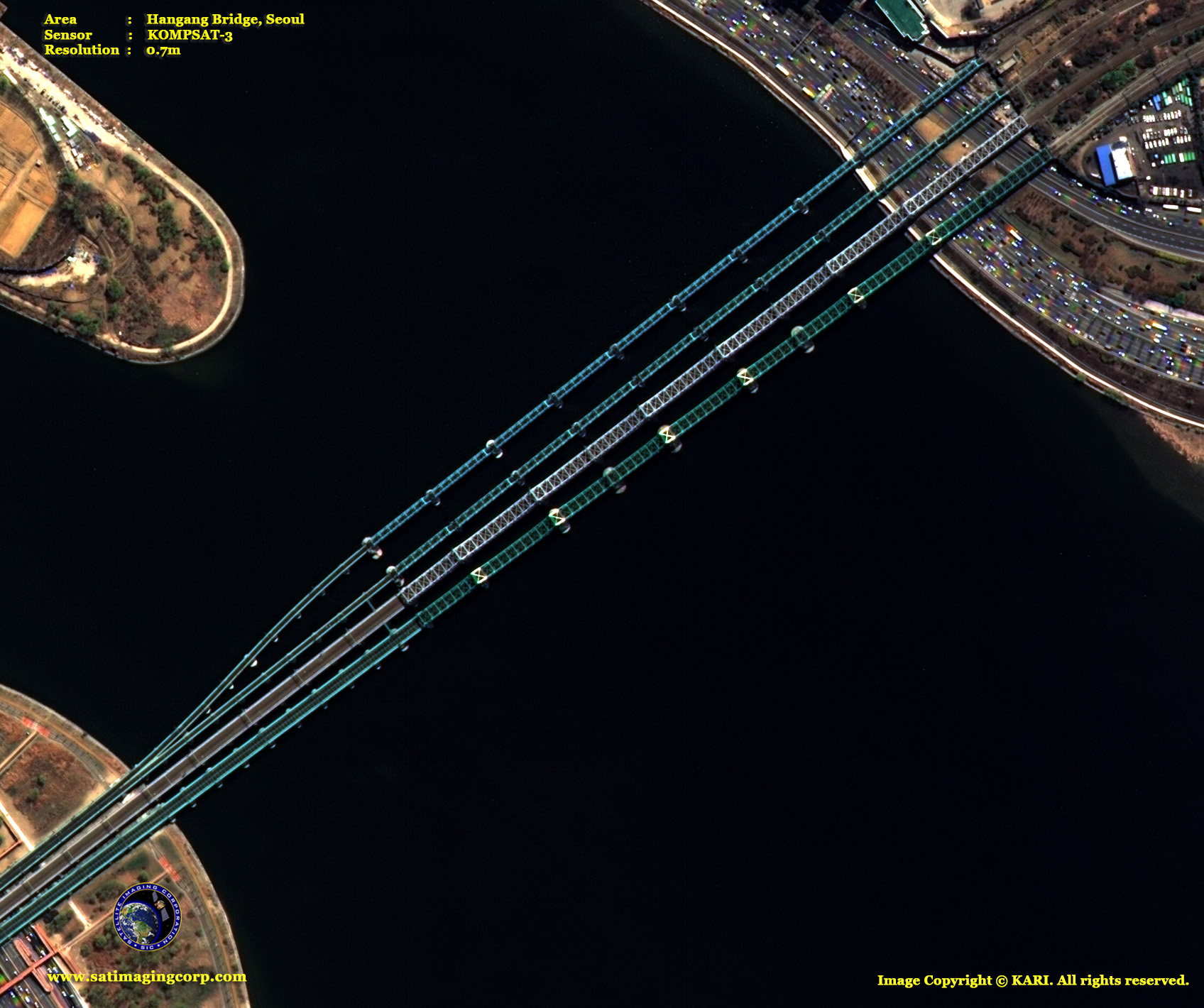
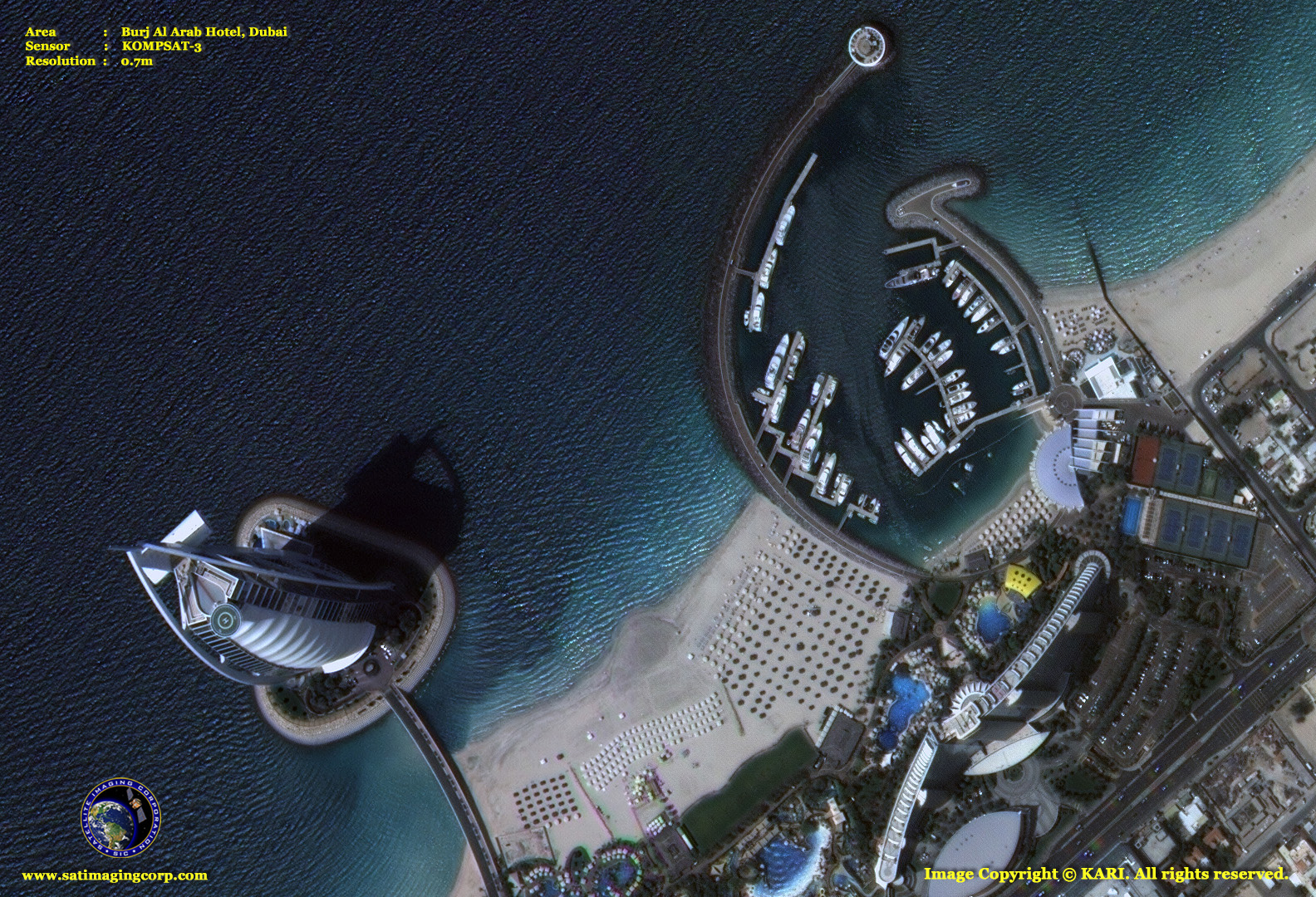
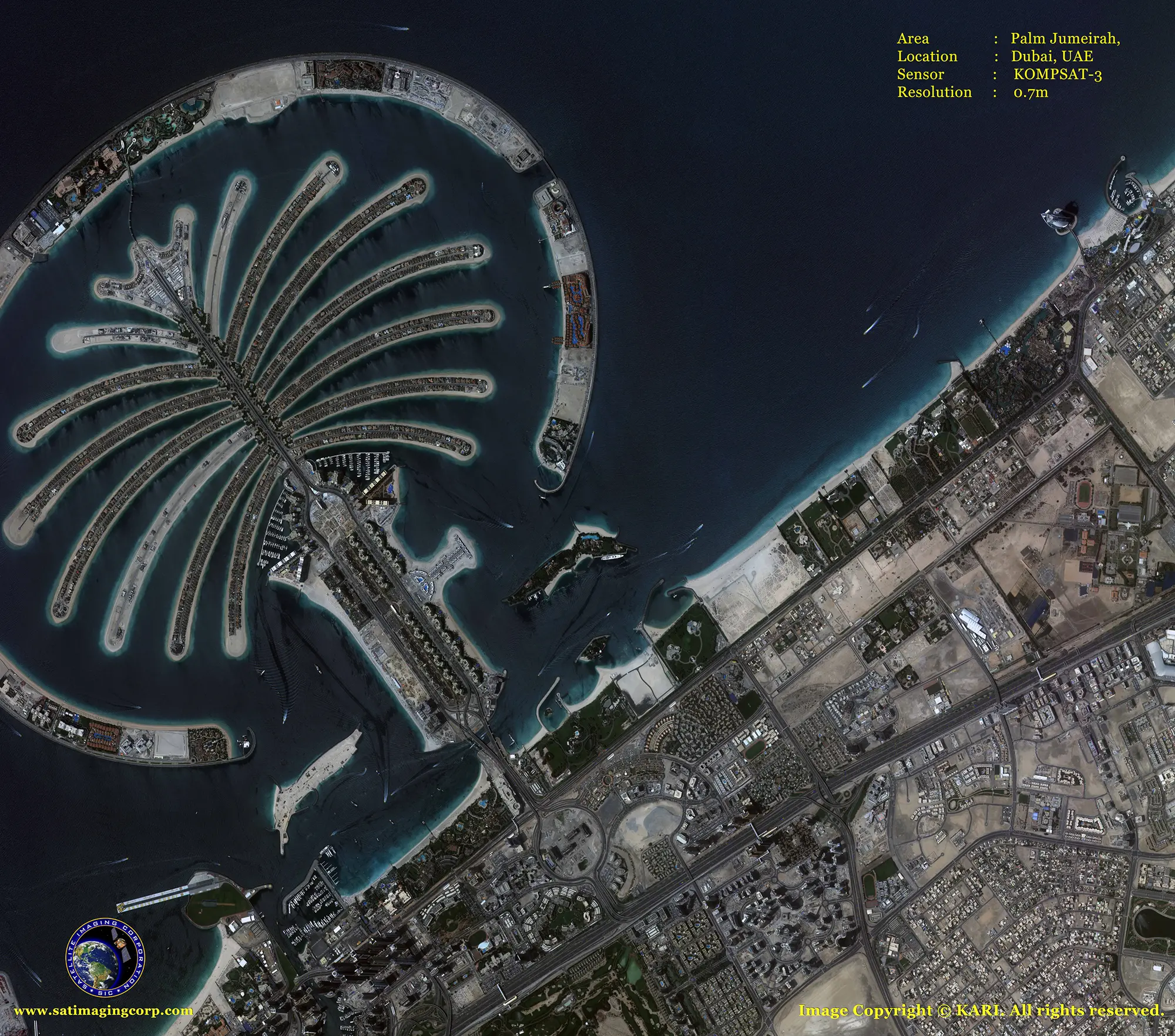
Sample Images
KOMPSAT-3A Satellite Image Gallery
* Click on thumbnail to view in full resolution.
For more information on any of our products and image processing services, please contact us for a complimentary consultation.
KOMPSAT-3A Satellite Sensor Specifications
Spectral bands
Panchromatic: 450-900 µm
Multispectral:
Blue: 450-520 µm
Green: 520-600 µm
Red: 630-690 µm
NIR: 760-900 µm
MWIR: 3.3 – 5.2 µm
Optics
– Korsch-type telescope design on a CFRP optical bench
– 80 cm diameter of primary mirror aperture (the mirrors are lightweighted)
– All mirrors (5) are of Zerodur design
– Focal length = 8.6 m
– F number = f/11.5
GSD (Ground Sample Distance)
Panchromatic: 0.55m at nadir
Multispectral: 2.2m at nadir
Infrared: 5.5 m at nadir
Swath width
12 km (at nadir)
Pan CCD detector module
– Line array of 24,000 pixels consisting of 2 stacks of 12 k pixels each
– TDI (Time Delay Integration), up to 64 TDI in 4 stages
– Pixel pitch = 8.75 µm
– Source data rate = 16 x 15 Mpixel/s (or 3.84 Gbit/s)
MS CCD detector module
– Line array of 6,000 pixels, provision of 8 stacks, TDI capability
– Pixel pitch = 2 x 17.5 µm
– Binning of Multispectral pixels (Multispectral pixels are 4 times longer than Panchromatic pixels)
– Source data rate = 4 x 240 Mbit/s
Antiblooming
Yes
PRNU (Photo Response Non-Uniformity)
Yes
DSNU (Dark Signal Non-Uniformity)
Yes
SNR (Signal-to-Noise Ratio)
> 100 for Panchromatic and Multispectral
Data quantization
14 bit
Data compression
CCSDS 120.1-G-1E
Payload data memory
512 Gbit
Data rate
1 GB/s